
Efficient Individual Learning
How can AI learn a new individual from limited evidence? What should it ask next, and how can active elicitation improve understanding per interaction?
Research & Writing
Explore our research, open initiatives, and writing on how AI can continuously learn about individuals and adapt to them.
01Research directions
How can AI understand an individual deeply enough to adapt meaningfully—while learning efficiently, recognizing uncertainty, and improving through experience?
How can AI learn a new individual from limited evidence? What should it ask next, and how can active elicitation improve understanding per interaction?
How can AI distinguish stable individual tendencies from domain-specific preferences, temporary circumstances, and unknown or conflicting evidence?
What knowledge transfers between different contexts, and how can AI identify when transfer is useful—or likely to be misleading?
How can predictions, targeted verification, and feedback improve user-specific decisions and interaction policies over time?
02Open research community
An open research agenda and community for User-Specific Interaction Learning (USIL).
How should AI agents learn when to ask, act, explain, or return control—adapting how they work with each person through experience?
Learning to Work with You brings together research questions at the intersection of agent learning, human–AI interaction, personalization, and robotics.
We’re building an open community where researchers and practitioners can explore shared problems, contribute to a living research map, develop evaluation approaches, and collaborate on new ideas.
Explore the open research agenda and the living research map.
Contribute papers, corrections, and research questions.
Connect with researchers and explore collaborations.
Idios Labs explores individual learning broadly. Learning to Work with You focuses specifically on user-specific interaction learning, as an open scientific community.
03Evaluation & benchmarks
Ongoing research direction · Individual Learning Benchmark
Given limited interactions with an individual, how accurately can a system predict their preferences and desired AI behavior on unseen tasks and domains?
This work is in progress. We plan to share methodology and results as they mature.
We are developing an evaluation framework that examines:
04Writing
AI is learning what good looks like. It hasn’t learned what good looks like for you.
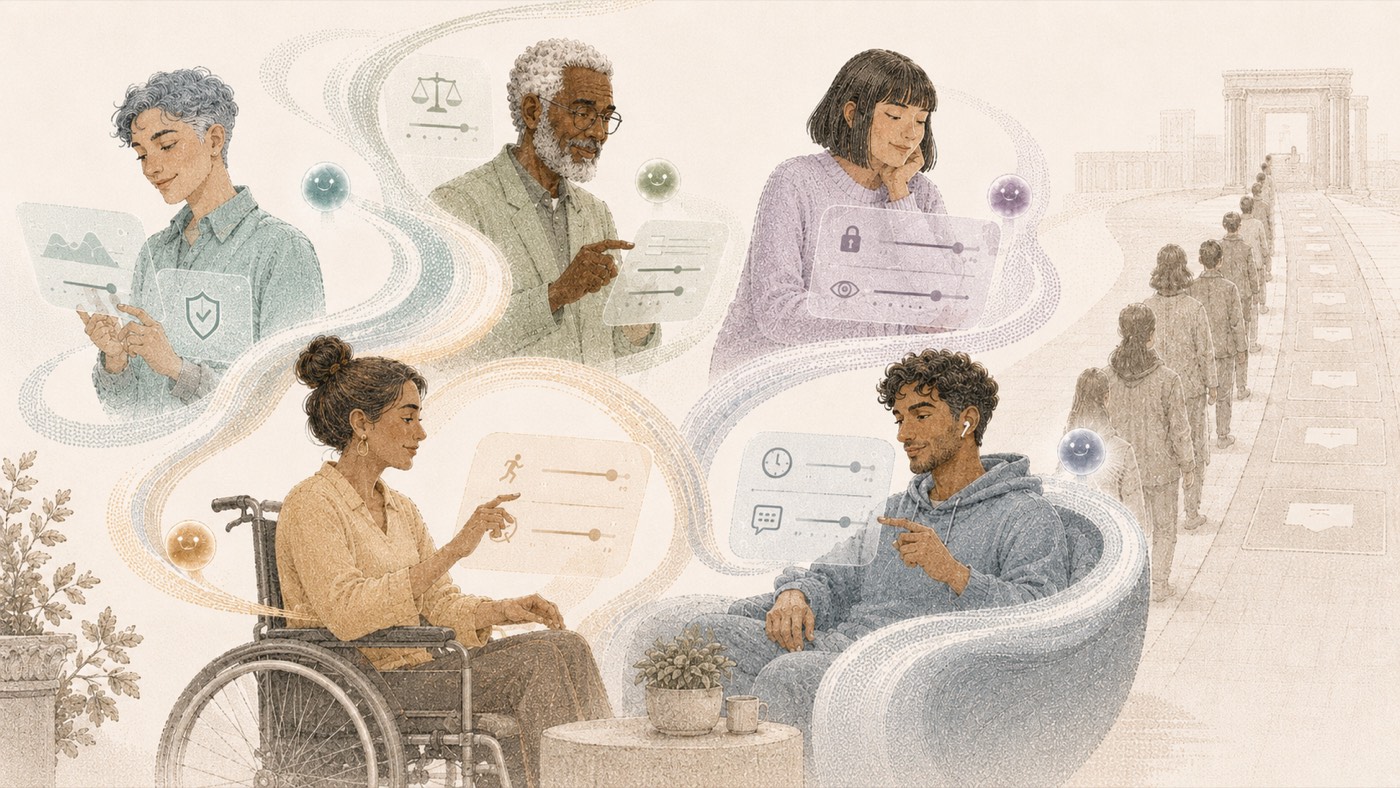
An exploration of procedural preferences, human individuality, and why AI should learn to adapt to people rather than average away their differences.
More writing and research updates to come.