AI should adapt to you, not the average of everyone.
Idios learns how you want work done — not just what you want.
Idios learns how you want work done — not just what you want.
Every one of these is the right answer for someone. Pick one default and you are wrong for most of them.
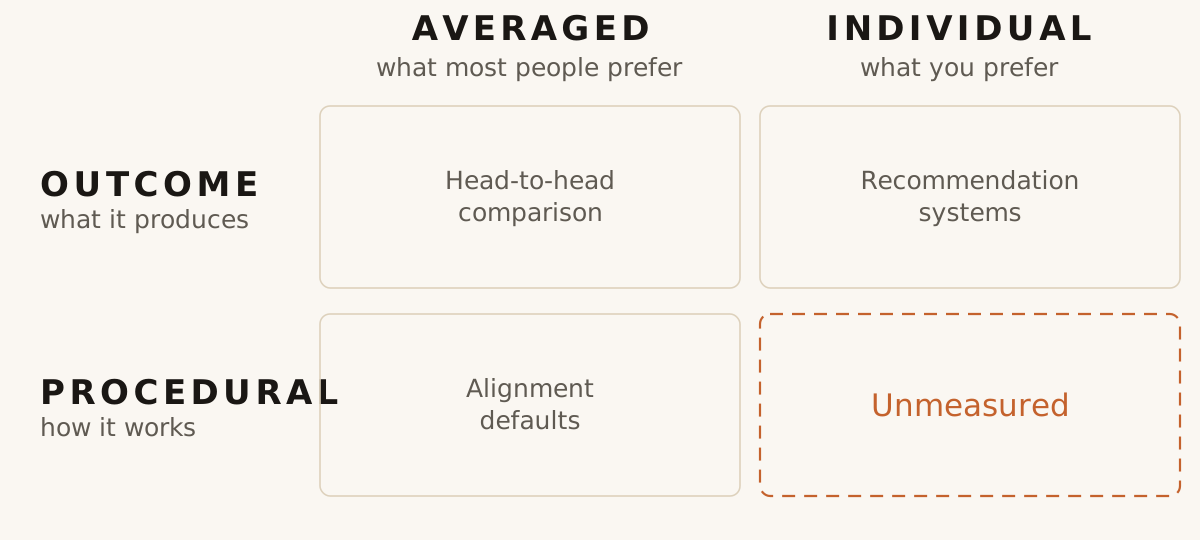
This is a different axis from the one AI already personalizes. What an agent produces — which summary is cleaner, which design is better — converges: ask enough people and they largely agree. How the work gets done diverges by person. That axis only became observable when agents began acting on our behalf, and it's the one that matters once they do.
People differ in how much control they want, when an agent should ask before acting, and what counts as a good outcome. Today's AI averages all of that into one default behavior. We learn each person's procedural preferences and make agents behave accordingly.
What people actually do — correct, override, take control, redo, abandon — says more about how they want to be served than anything they would write in a settings panel.
The variance between people is the most valuable thing in the data. Averaging it produces an agent that is acceptable to everyone and right for no one.
The long-term product is a portable memory of how you want work done — owned by you, carried into any new agent, product, or robot so it immediately knows how to work with you.